

There are lectures about history. There are performances about history. And then there is what Audrey Johnson does, which is something else entirely.
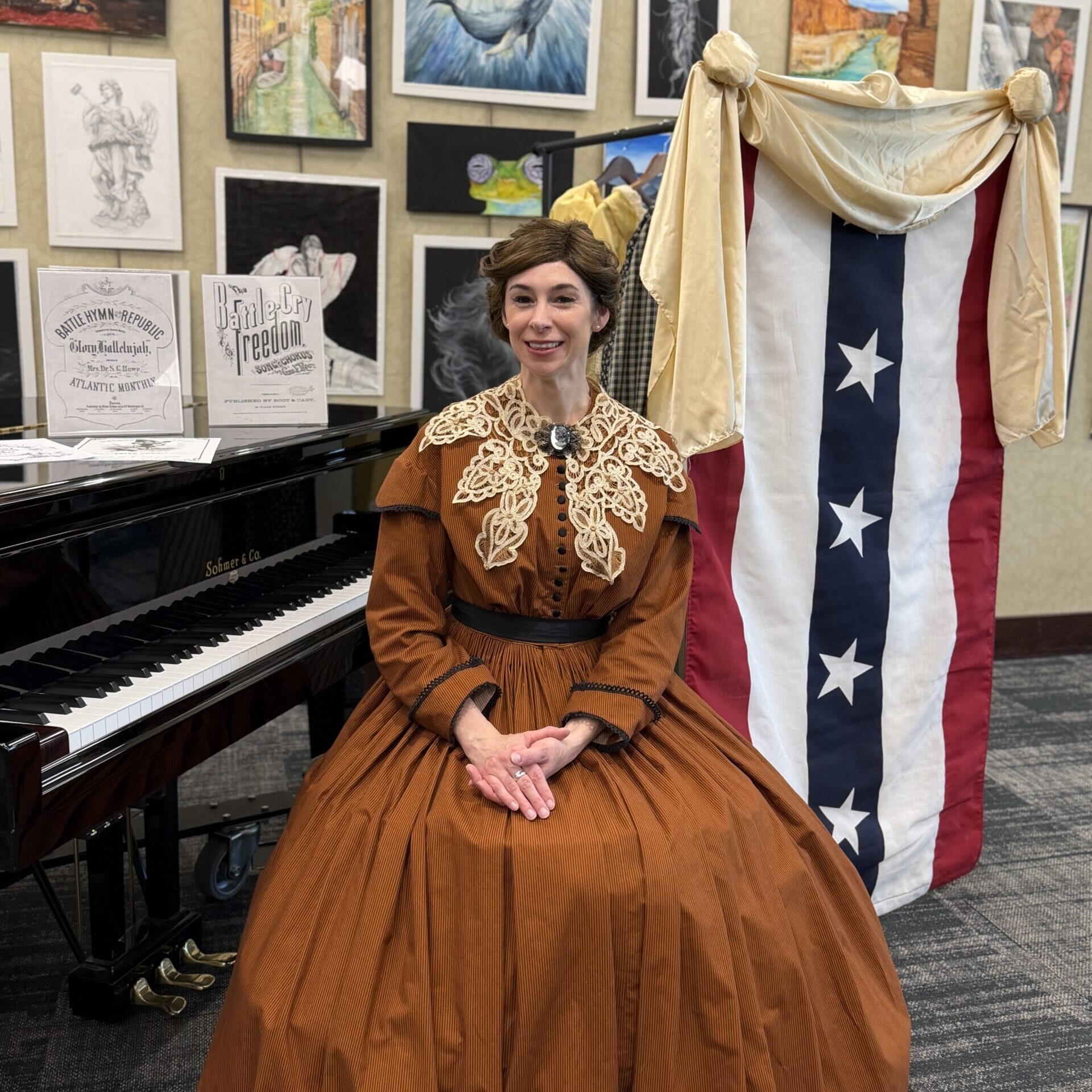
On Tuesday, May 12, at 7 p.m., the Indianapolis Symphonic Choir welcomes Johnson to Butler University’s Lilly Hall, Room 112, for a free public event as part of its In-Choir-ing Minds education series. Her program, Mine Eyes Have Seen the Glory: Songs and Stories of the American Civil War, is designed to do what few educational experiences manage: put audiences inside history rather than simply in front of it.
It is the perfect companion to ISC’s season-closing Voices of the Spirit concert on May 17, and once you understand what Johnson does and why she does it, the pairing makes complete sense.
A Classical Vocalist Who Took a Different Path
Johnson is a mezzo-soprano with classical training that took her through conservatory programs and eventually to Germany, where she continued performing on the traditional trajectory most classical vocalists follow. What she found there surprised her.
“The most meaningful part of that experience was something I would never have expected,” she said. “It gave me a heightened sense of appreciation for what makes our culture and our people so special. I felt very called to remind people of how much we share, how much more we have in common than divides us.”
She returned to the United States with a mission. Rather than continuing to perform the traditional repertoire, she went into the historical music archives and began building programs that use American music to illuminate American history. Not to sugarcoat it, not to whitewash it, but to bring it to life in a way that is immersive, educational, and motivational.
Her company, Of Thee I Sing, now offers seven distinct program themes ranging from the Colonial and Revolutionary Era to the Women’s Suffrage Movement to the History of American Christmas Music. The Civil War program, Mine Eyes Have Seen the Glory, is the newest.
Not a Recital. An Experience.
Johnson is quick to make one thing clear when she describes her work: these are not traditional performances.
“I am very quick to say these are not traditional recitals,” she said. “They are multisensory experiences. They encourage the audience to be engaged and participate throughout.”
The fourth wall is broken from the start. Johnson speaks to audiences throughout, weaving a narrative that connects the music to the history it shaped. Historical image projections accompany the storytelling. Her costumes transform across the program, reflecting the fashion of each era and adding another layer of historical immersion. And audiences sing. Johnson teaches the choruses of multiple songs throughout each program so that everyone in the room feels confident joining in during appropriate moments.
The philosophy behind all of it is deliberate.
“People take to heart what they help to create,” she said. “If you’re a passive audience member, there’s nothing inherently wrong with that. But I want this to not only resonate with audience members in the moment. I want it to stick with them and inform their actions going forward.”
One of the most powerful things Johnson has discovered through curating the Civil War program is how directly music shaped the events of that era.
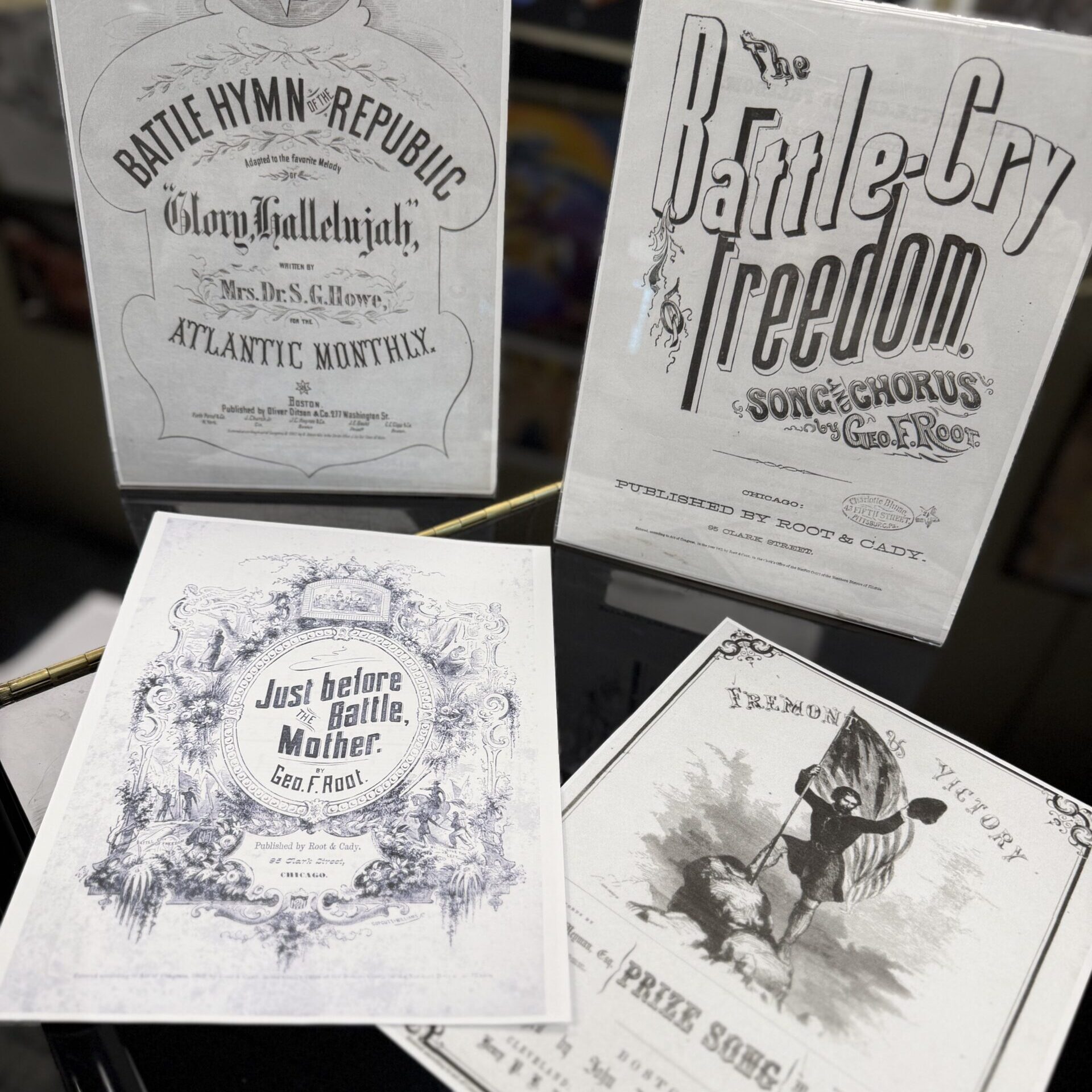
She points to The Battlecry of Freedom, written by Union composer George Frederick Root. When Abraham Lincoln needed soldiers to enlist, Root wrote the song. The ink was reportedly still wet on the paper when it was rushed to vocalists for a rally. From the first performance, the response was overwhelming. Union officers began implementing it as part of battlefield strategy, with companies singing it as they advanced.
“The song tells the story about rallying around the flag,” Johnson said. “But the way that song became a driving force for our history is fascinating. It gave soldiers unity, strength, confidence, and courage when that was a matter of life or death.”
That is the thread running through everything Johnson presents. The music is not background. It is the evidence.
Why This Program Matters Right Now
When asked why this content, this music, and these lessons matter at this particular moment, Johnson does not hesitate.
“I don’t think anyone would argue that we are in a very challenging, trying time right now,” she said. “And I think sometimes people might think, well, maybe we need to not be thinking about the Civil War right now. Maybe that’s too hard. Maybe that’s too challenging.”
She thought the same thing when she began the research process. She was looking for pieces of history that would help move the needle forward rather than deepen division. What she found changed her perspective entirely.
“We cannot talk about the Civil War without discussing slavery and the abomination of that,” she said. “At the same time, we can also explore the humanity of everyone involved because that is our history. How can we, even as we are talking about one of the most terrible things in our country’s history, maintain the human aspect? How can we stay motivated toward one another? That is our job as Americans. It is a challenge, but it is not a challenge we cannot handle.”
Join Us
In-Choir-ing Minds featuring Audrey Johnson is free and open to the public on Tuesday, May 12, at 7:00 p.m., at Butler University’s Lilly Hall, Room 112. Voices of the Spirit follows on Sunday, May 17, at 3:00 p.m. at Second Presbyterian Church, 700 N. Meridian Street, Indianapolis. Tickets and information at indychoir.org.